

A reseller in Germany gets a cease-and-desist letter. Another in the UK has their supplier go dark overnight, taking thousands of active subscribers with them. A third in Spain keeps running, scales to 400 connections, and never has a problem. The difference between these three outcomes is not luck. It is understanding exactly where the legal lines sit in the IPTV industry and building a business that operates on the right side of them.
IPTV laws in Europe have tightened considerably since 2023, and 2026 is shaping up to be the most enforcement-heavy year yet. Regulators across the EU and the UK are coordinating more closely, ISPs are receiving more blocking orders, and payment processors are increasingly flagging accounts connected to unlicensed streaming activity. If you are running an IPTV reseller business or planning to start one, you need a clear picture of what is actually happening legally, not the vague reassurances you sometimes hear from suppliers.
This post breaks down the current state of IPTV legality across Europe in 2026, explains the critical distinction between reselling licensed M3U access and distributing pirated content, and gives you a practical framework for assessing your own exposure as a reseller.
The Core Legal Question: Content Rights, Not Delivery Format
A common misconception in the IPTV space is that the format of delivery determines legality. People assume that because M3U is just a playlist file pointing to streams, it exists in some kind of grey area. It does not. European courts and regulators have consistently ruled that the legality of IPTV is determined entirely by whether the content being streamed is properly licensed, not by the technical method used to deliver it.
The Court of Justice of the European Union made this explicit in a series of rulings that followed the landmark 2017 Filmspeler case. That case established that streaming unlicensed content, even as a passive viewer, can constitute copyright infringement under EU law. Since then, enforcement has moved steadily upstream toward the people who distribute and resell access to unlicensed streams.
What Makes an IPTV Service Legal
A legal IPTV service holds proper licensing agreements with the content owners or authorized distributors for every channel or VOD asset it provides. This means the provider has paid for broadcast rights, distribution rights, or sub-licensing rights in the territories where they operate. When you resell access to that service, you are operating downstream of a legitimate rights chain.
The practical question every reseller should ask their supplier is simple: can you show me the licensing agreements for the content you deliver? A legitimate wholesale IPTV provider will be able to answer this clearly. If the answer is vague, dismissive, or if the pricing seems impossibly low for the volume of premium content on offer, that is a serious warning sign.
What Makes an IPTV Service Illegal
An illegal IPTV service restreams content it has no rights to. This typically includes live sports from Sky, BT Sport, beIN Sports, or Canal+, premium movie channels, and first-run content from major broadcasters, all delivered without any licensing agreement in place. The provider is essentially intercepting legitimate broadcast signals or scraping streams and redistributing them for profit.
When you resell access to one of these services, you become part of the distribution chain for copyright infringement. European law is clear that distributors and resellers can be held liable, not just the original source. This is the exposure point most resellers underestimate.

IPTV Legality Across Key European Markets in 2026
While EU copyright directives create a baseline framework, individual member states and the UK have their own enforcement approaches, and the intensity of that enforcement varies significantly. Here is what the landscape looks like in the markets most relevant to IPTV resellers right now.
Is IPTV Legal in the UK in 2026?
The UK remains one of the most aggressive enforcement environments in Europe for unauthorized IPTV. The Premier League, Sky, and other rights holders have invested heavily in legal action and technical blocking measures. In 2026, the UK’s live blocking system, which allows courts to issue dynamic injunctions that update in near real-time to block new server IPs, is fully operational and increasingly effective.
FACT (the Federation Against Copyright Theft) continues to pursue criminal prosecutions for resellers of illegal IPTV services in the UK. Sentences have included custodial terms, not just fines. The Serious Fraud Office has also been involved in cases where reseller revenue has been significant enough to trigger proceeds-of-crime considerations.
For UK-based resellers, the message is unambiguous: reselling access to unlicensed premium content is a criminal matter, not just a civil one. The question of is IPTV legal in UK 2026 has a clear answer: legal IPTV from licensed sources is perfectly fine; reselling pirated streams is not, and enforcement is active.
Germany and the DACH Region
Germany has some of the strictest copyright laws in Europe, and the legal system there is notably efficient at issuing and enforcing injunctions. German courts regularly issue blocking orders to ISPs, and rights holders have been successful in pursuing damages from resellers. The DACH region as a whole, including Austria and Switzerland, has seen increased coordination between rights holders and telecommunications regulators in 2025 and 2026.
Southern and Western Europe
France, Spain, and Italy have all increased their enforcement activity significantly. France amended its copyright law in 2021 to allow ARCOM (formerly CSA) to order ISPs to block piracy sites and streams within 24 hours. Spain passed similar legislation in 2022. Italy, which has historically been one of the larger markets for pirated football streams, passed the Piracy Shield law in 2024, which has resulted in thousands of IP blocks targeting unauthorized IPTV services.
The Italian Piracy Shield in particular is worth noting because it has been aggressive enough to occasionally catch legitimate services in its blocking net, creating service interruptions even for compliant providers. This is an operational risk resellers should factor into their supplier selection process.
Nordic Countries
The Nordic markets, including Sweden, Norway, Denmark, and Finland, have robust intellectual property frameworks and active enforcement. Rights holders in these markets have been effective at pursuing both civil damages and criminal referrals for commercial-scale IPTV piracy. Resellers operating in these markets face a well-funded and legally sophisticated opposition if they are distributing unlicensed content.
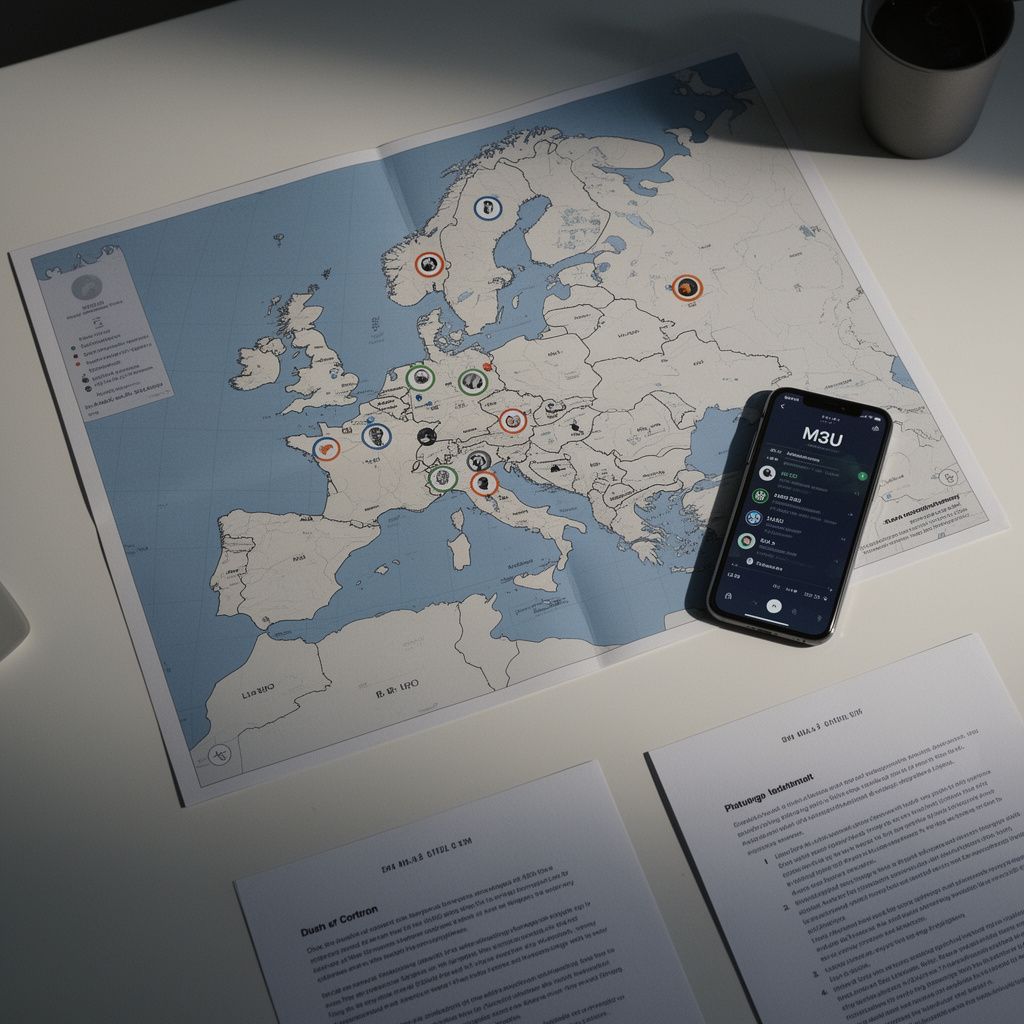
Reselling M3U Access vs. Piracy: Where the Line Actually Sits
This is the distinction that matters most for anyone building an IPTV reseller business in 2026. The delivery mechanism, whether M3U, Xtream Codes, or any other format, is legally irrelevant. What matters is the rights chain behind the content.
Reselling M3U access from a licensed wholesale provider means you are operating as a downstream distributor of a legitimate service. Your supplier holds the rights, you hold a reseller agreement with your supplier, and your customers receive access to content the rights holders have been compensated for. This is a legitimate business model. It functions similarly to how a telecom reseller might sell mobile contracts on behalf of a network operator.
Distributing M3U links that point to unlicensed streams means you are participating in copyright infringement at a commercial scale. The fact that you personally did not capture or restream the content does not insulate you from liability. European courts have consistently held that commercial distribution of access to infringing content constitutes infringement, regardless of whether the distributor is the original source.
The Pricing Signal
One of the most reliable ways to assess whether a wholesale IPTV supplier is operating legitimately is pricing. Legitimate licensing agreements for premium content cost real money. A supplier offering unlimited access to Sky Sports, Champions League, Netflix, HBO, and hundreds of other premium channels for a few dollars per connection per month cannot possibly be covering their licensing costs at that price point. The economics do not work. If the pricing seems too good to be true relative to the content on offer, the content is almost certainly unlicensed.
The Supplier Stability Signal
Unlicensed IPTV services are in a constant battle with rights holders, ISPs, and regulators. They change IPs frequently, go offline during major sporting events, and sometimes disappear entirely after enforcement actions. If your supplier has a history of outages during peak content events, that is a strong operational indicator that they are not operating with proper licensing. For your customers, this means unreliable service. For you, it means you are building a business on an unstable and legally exposed foundation.
How Legitimate Resellers Protect Themselves
Beyond choosing a licensed supplier, resellers can take additional steps to protect their business. These include maintaining a written reseller agreement with their supplier that clearly states the supplier’s responsibility for content licensing, avoiding marketing language that references specific unlicensed premium channels by name, keeping clear records of their own customer agreements, and staying informed about enforcement trends in their target markets.
Working with a supplier like Lukkystreams, which operates on a transparent M3U delivery model and provides country-specific channel packages for Arabic, European, South Asian, and African audiences, gives resellers a clean foundation to build on. The simplicity of the M3U model also makes it easier to understand exactly what you are reselling and to represent it accurately to your customers.
Practical Risk Assessment for IPTV Resellers in 2026
Understanding the legal landscape is useful. Translating it into a practical risk assessment for your specific situation is what actually protects you. Here is a framework for thinking through your exposure as an IPTV reseller operating in or serving European markets.
Assess Your Supplier First
Before you take on a single customer, your supplier relationship is your primary legal risk factor. Ask your supplier directly about their licensing model. Review their terms of service. Look at how long they have been operating and whether they have a track record of stability. Check whether they have a legitimate business presence, not just a Telegram channel and a payment link.
A wholesale IPTV provider that has been running reliably for years, offers transparent pricing, and operates with a clear business structure is a fundamentally different risk profile than one that appeared six months ago with suspiciously cheap pricing and no verifiable business identity.
Know Your Target Market
Different European markets have different enforcement intensities. If you are primarily serving UK customers with sports content, you are operating in the highest-risk enforcement environment on the continent. If you are serving diaspora communities with country-specific content packages, such as Arabic, South Asian, or African channels, the rights landscape is different and often more straightforward, because the content is licensed for distribution in those diaspora markets.
This is one reason why resellers who focus on niche ethnic and regional content packages often face less legal exposure than those chasing the premium sports market. The content is more likely to be properly licensed, the enforcement pressure from major rights holders is lower, and the customer base is genuinely underserved by mainstream providers.
Structure Your Business Appropriately
Operating as a registered business entity, maintaining clear customer agreements, and keeping accurate financial records are not just good business practice. They also help establish that you are operating in good faith as a legitimate reseller rather than as a knowing participant in copyright infringement. In enforcement scenarios, the distinction between a registered reseller with a paper trail and an anonymous operator running everything through personal accounts and cryptocurrency can be significant.
Stay Current on Regulatory Changes
IPTV laws in Europe are not static. The EU’s Digital Services Act, which came into full effect in 2024, has created new obligations for platforms and intermediaries. National implementations of EU copyright directives continue to evolve. Enforcement priorities shift as rights holders target different parts of the distribution chain. Staying informed through industry publications, legal advisories, and reseller communities is part of running a responsible business in this space.

Building a Sustainable IPTV Reseller Business in the Current Legal Environment
The resellers who thrive long-term in the European IPTV market are not the ones who found the cheapest supplier with the most channels. They are the ones who built on a legitimate foundation, understood their legal environment, and focused on serving customers who genuinely need what they offer.
The market for legal IPTV content in Europe is substantial. There are millions of people in diaspora communities across the UK, Germany, France, the Netherlands, Sweden, and elsewhere who want reliable access to content from their home countries. Arabic-speaking communities want Al Jazeera, MBC, and regional Arabic channels. South Asian communities want Pakistani and Indian news and entertainment. African communities want content from Nigeria, Ghana, Ethiopia, and across the continent. These are real, paying audiences with genuine unmet needs that mainstream streaming services do not address well.
Serving these audiences with properly licensed content through a reliable M3U delivery model is a legitimate and sustainable business. It does not require you to compete in the legally exposed premium sports piracy market. It does not require you to constantly worry about your supplier going dark after an enforcement action. It requires you to find a reliable wholesale supplier, build customer relationships, and deliver consistent service.
Lukkystreams is built specifically for resellers who want to operate this way. The platform provides scalable M3U connection packages across a range of country-specific content categories, with high EPG accuracy and a delivery model that is straightforward to understand and represent to customers. For resellers who want to build something that lasts, that kind of operational clarity is worth a great deal.
The IPTV reseller market in Europe in 2026 is not a place to cut corners on legality. The enforcement environment is too active, the consequences are too serious, and the legitimate opportunity is too real to risk on suppliers who cannot answer basic questions about their licensing model. Build on solid ground, serve audiences who need what you offer, and the business can be both profitable and durable.
Ready to Build a Legitimate IPTV Reseller Business?
Lukkystreams provides transparent M3U-based wholesale IPTV connections for resellers who want to operate on solid ground. Explore our packages, test the service, or get in touch directly.
- View Plans and Pricing – Scalable connection packages for resellers of any size
- Start a Free Trial – Test the service before you commit
- WhatsApp Support – Talk to the team directly
- Contact Us – Get answers to your specific questions
IPTV Laws – FAQs
Is IPTV legal in Europe in 2026?
IPTV is legal in Europe when the service provider holds proper licensing agreements for the content being streamed. The legality is determined by content rights, not the delivery format. Reselling access to licensed IPTV services is a legitimate business. Reselling access to unlicensed streams constitutes copyright infringement under EU law.
Is IPTV legal in the UK in 2026?
Legal IPTV services from licensed providers are perfectly lawful in the UK. However, the UK is one of the most aggressive enforcement environments in Europe for unauthorized IPTV. Reselling access to unlicensed premium content can result in criminal prosecution, including custodial sentences, under UK copyright law. FACT and rights holders like the Premier League actively pursue enforcement actions.
What is the difference between legal IPTV reselling and piracy?
Legal IPTV reselling involves distributing access to a service whose provider holds proper content licensing agreements. Piracy involves distributing access to streams that have been captured or restreamed without rights holder authorization. The delivery format, such as M3U, does not determine legality. The rights chain behind the content does.
How can IPTV resellers protect themselves legally in Europe?
Resellers can protect themselves by choosing wholesale suppliers who can demonstrate legitimate content licensing, maintaining written reseller agreements, avoiding marketing that references specific unlicensed premium channels, operating as a registered business entity, keeping clear customer and financial records, and staying informed about regulatory changes in their target markets.