

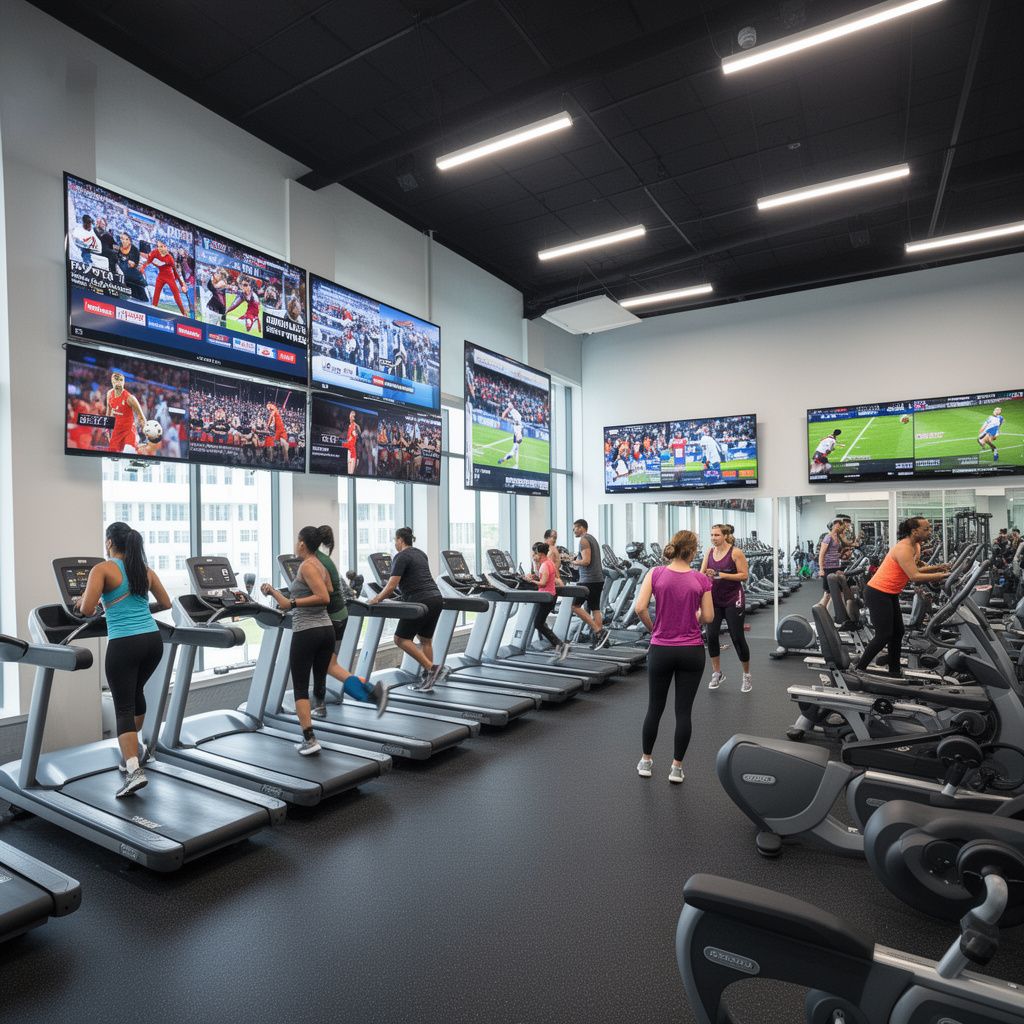
A single gym owner running three screens for live sports needs at least three simultaneous streams, reliable uptime during peak hours, and a feed that does not buffer mid-match when the room is packed. That is not a consumer sale. That is a commercial contract, and it is worth five to ten times what you earn from a household subscriber. Most IPTV resellers walk right past this opportunity because they are focused on one-connection-at-a-time retail sales. The ones who build real revenue in 2026 are the ones who understand that gyms, hotels, and commercial venues are a completely different market with completely different needs, and they are willing to pay accordingly.
This guide is written for IPTV businesses that already have a working setup and want to move upstream into higher-value B2B territory. We will cover how to position yourself, what commercial clients actually need, how to price for venues, and how to structure your backend so you can handle multi-connection accounts without chaos.
Why Commercial Venues Are the Most Underserved Segment in the IPTV Market
Legitimate streaming options have underserved the hospitality and entertainment sector for years. Traditional broadcast packages for commercial use are expensive, locked into long contracts, and often do not include the international content that venues need to serve diverse customer bases. A sports gym in a city with a large Arabic or South Asian community needs channels that a standard cable package simply does not carry. A hotel catering to European business travelers needs Nordic, Italian, or Spanish content in guest rooms. The gap between what legacy providers offer and what these venues actually need is enormous, and that gap is where a smart IPTV reseller operates.
Consider the numbers. A single hotel with fifty rooms is a potential fifty-connection account. A gym group with four locations running three screens each is a minimum of twelve connections. A gym chain with screens in every zone could need twenty or more. These are not hypothetical numbers. They are the kind of accounts that resellers who focus on the commercial IPTV reseller guide 2026 framework are actively closing right now, while the majority of the market fights over single-household subscriptions.
The Pain Points Commercial Clients Actually Have
Before you walk into any venue with a pitch, you need to understand what keeps the owner or manager up at night. It is almost never about price first. The real concerns are reliability, content breadth, and simplicity of management.
- Reliability during peak hours: A cafe that loses its stream during a Champions League final does not just have a bad night. It loses regulars. Uptime is non-negotiable.
- Multi-screen synchronization: Running the same channel on multiple screens without lag or sync issues matters in a live sports environment.
- International content: Urban venues especially need Arabic, South Asian, African, and European packages to serve their actual customer demographic.
- Simple management: The cafe manager is not an IT professional. They need something that works without daily troubleshooting calls to you.
- Flexible scaling: A venue that adds a patio space in summer needs to add connections without renegotiating an entire contract.
When you address these pain points directly in your pitch, you are not selling IPTV. You are selling a solution to a business problem. That framing changes the conversation completely.
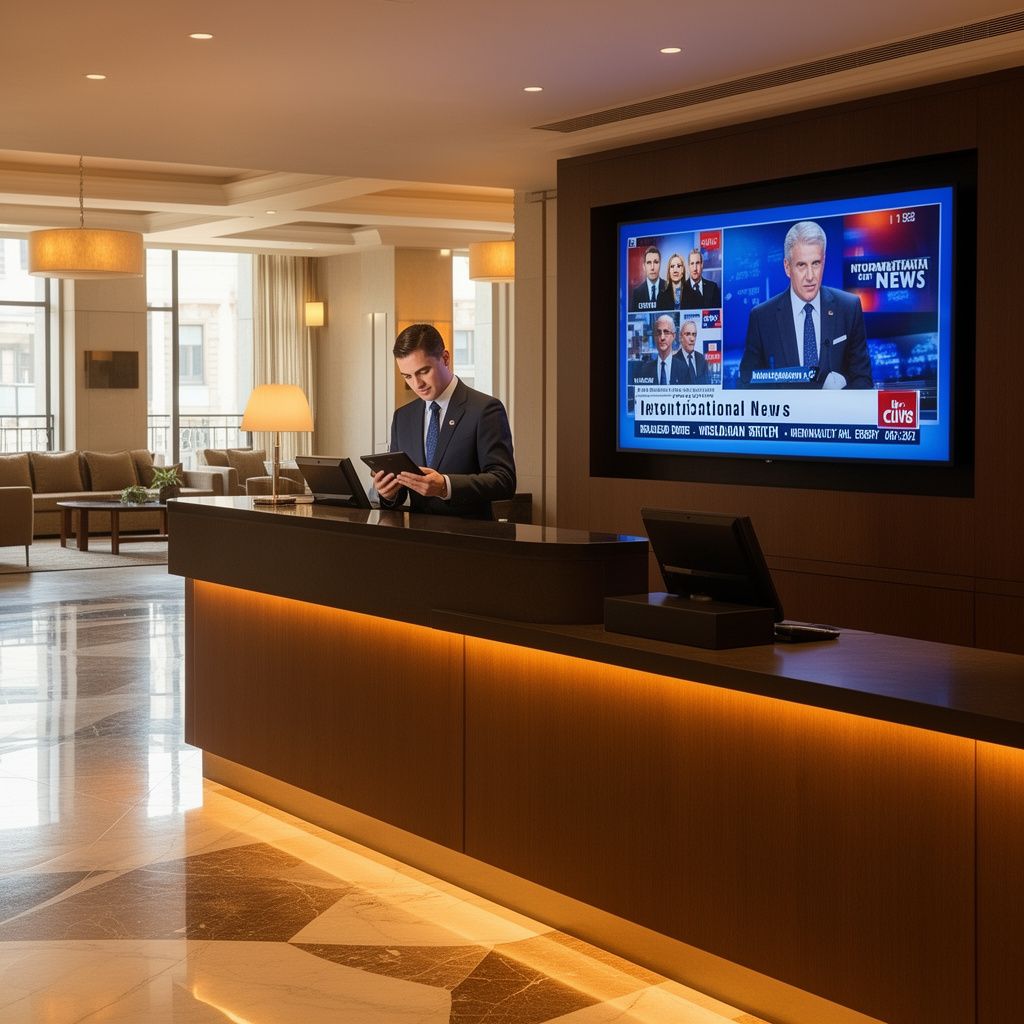
Structuring IPTV Businesses for Commercial Accounts
Serving commercial clients requires a different backend structure than retail. You cannot manage a fifty-connection hotel account the same way you manage fifty individual household subscribers. The logistics, the support model, and the pricing architecture all need to be built for volume and reliability from the start.
Choosing the Right Wholesale Partner
Your ability to serve commercial clients depends entirely on your upstream provider. You need a wholesale source that offers scalable connection packages, stable streams under load, and country-specific channel packages that match the diverse content needs of hospitality venues. This is exactly where Lukkystreams is built for resellers who want to move into commercial territory. The pure M3U delivery model means you are not wrestling with panel complexity when you are trying to configure a ten-screen cafe setup. You get the connections, you get the M3U links, and you deploy them cleanly across devices.
When evaluating your wholesale setup for commercial work, look for these specifics. First, connection packages that scale without friction. You should be able to add connections for a new venue account without a complicated renegotiation process. Second, EPG accuracy. Commercial clients notice when the program guide is wrong because their customers ask about it. High EPG accuracy across all packages is not a nice-to-have for venues. It is a requirement. Third, support that is actually responsive. When a hotel calls you at 11pm because a guest is complaining, you need to be able to resolve it quickly.
Building Your Connection Inventory
For commercial-focused resellers, buying connection capacity in bulk upfront gives you margin flexibility and faster onboarding for new accounts. If you are approaching venues in a specific city or region, you can pre-load connection capacity based on the likely content packages those venues will need. A cluster of venues serving Middle Eastern clientele will need Arabic and Gulf packages. A hotel district near a business hub may skew heavily toward European content.
The practical approach is to segment your inventory by content region and have ready-to-deploy packages for each. When a new venue comes on board, you are not scrambling to configure from scratch. You have a template that deploys in minutes. This operational efficiency is what lets you scale from five commercial accounts to fifty without proportionally scaling your own workload.
Device Compatibility and On-Site Setup
Commercial venues use a range of display hardware. Smart TVs, commercial display screens with Android boxes, dedicated media players, and in some cases, IPTV middleware systems. Your M3U-based setup needs to be compatible across this range. The advantage of a pure M3U model is that it works with virtually any player that supports the format, which covers the vast majority of hardware you will encounter in the field. Document your setup process for each major device type you encounter. Over time, you build a deployment playbook that any technician you bring on can follow.
Pricing Strategy for the Hospitality Sector
Pricing commercial IPTV accounts is where most resellers either leave money on the table or price themselves out of deals. The key is understanding that commercial clients are not comparing you to a consumer IPTV subscription. They are comparing you to their existing broadcast or cable contract, which is almost certainly more expensive and less flexible than what you offer.
Per-Screen Pricing vs. Flat Monthly Contracts
There are two common pricing models for selling iptv to hospitality sector clients. Per-screen pricing charges a monthly fee for each active connection or screen. Flat monthly contracts charge a venue a fixed amount for a defined number of connections within a given content package. Both models work, but they suit different types of venues.
Per-screen pricing works well for smaller venues like independent cafes where the screen count is fixed and predictable. It is easy to explain and easy to invoice. A cafe with four screens pays for four connections. Simple.
Flat contract pricing works better for hotels and larger venues where the connection count is high, and the client wants budget predictability. A hotel paying a fixed monthly fee for up to sixty connections in a specific content package knows exactly what their cost is each month. You build in a reasonable ceiling that protects your margin while giving them the flexibility they value.
Calculating Your Margins on Bulk Connections
Your margin on a commercial account comes from the spread between your wholesale connection cost and your retail contract price, multiplied by the volume of connections. When you buy connection capacity in bulk from a wholesale provider, your per-connection cost drops significantly compared to retail pricing. That spread is your margin, and on a fifty-connection hotel account, it adds up to a meaningful monthly recurring revenue figure.
A practical example: if your wholesale cost for a connection is X per month and you charge the venue two to three times X per screen, you are running a healthy margin. Multiply that across twenty, thirty, or fifty screens and you understand why commercial accounts are worth the additional sales effort. A single well-structured hotel contract can generate more monthly revenue than thirty individual household subscribers, with far less ongoing support overhead per connection.
Value-Added Services to Increase Contract Value
Beyond the base streaming service, there are legitimate value-added services you can layer into commercial contracts to increase your average contract value. On-site setup and device configuration is one. Venues will pay a one-time fee for professional installation which means they do not have to figure it out themselves. Monthly maintenance visits or remote monitoring is another. For a hotel, knowing that someone is actively watching their system health is worth a premium. Custom channel list curation is a third option. Working with a venue to build a channel lineup that matches their specific customer demographic is a service that generic providers cannot offer.
Finding and Closing Commercial IPTV Clients
The sales process for commercial accounts is longer than consumer sales but the payoff is proportionally larger. You are not closing a twenty-dollar-a-month subscriber. You are closing a contract that might be worth hundreds of dollars per month over a multi-year relationship. Treat the sales process accordingly.
Identifying the Right Venues to Target
Not every venue is a good commercial IPTV prospect. The best targets share a few characteristics. They currently pay for some form of broadcast or streaming service, which means they already see the value. They serve a customer base with specific international content preferences, which means your content library is a genuine differentiator. And they have enough screen real estate that multi-connection packages make sense.
In practice, this means focusing on sports cafes, international restaurants with TVs, hotels in business or tourist districts, gyms and fitness centers, airport lounges, and co-working spaces. Within each category, the venues that serve diverse or international clientele are your warmest prospects because you can offer them content that their current provider simply does not have.
The Pitch That Actually Works
Walk in as a consultant, not a salesperson. Your opening is not about IPTV at all. It is about their current setup. Ask what they are currently using, what their customers ask for that they cannot deliver, and what their biggest frustration with their current service is. Listen more than you talk in the first meeting. By the time you introduce your solution, you should be able to frame it specifically around the gaps they just described to you.
Bring a demo. Set up a tablet or small screen showing a live channel from a package that matches their customer demographic. If you are pitching a cafe that serves a Middle Eastern community, show them the Arabic package live. If it is a hotel catering to European business travelers, show them the Nordic or Italian content. Real content playing live is more convincing than any slide deck.
Handling Objections Around Legality and Reliability
Commercial clients will ask about legality and reliability more directly than consumer customers. Be prepared with honest, clear answers. On reliability, your answer is uptime track record and what your support process looks like when something goes wrong. On the content side, position your service around what you can deliver and the technical quality of the streams. Do not make promises you cannot back up. Commercial clients remember when you overpromise and underdeliver, and they talk to other venue owners in their network.
Managing and Retaining Commercial Accounts Long-Term
Closing a commercial account is the beginning, not the end. The real value of a B2B IPTV business is in retention. A venue that stays with you for three years is worth dramatically more than one you close and lose in six months. Long-term retention requires proactive account management, not just reactive support.
Setting Up Monitoring and Proactive Support
For commercial accounts, do not wait for the client to call you with a problem. Set up basic monitoring on their connections so you know about issues before they do. There are straightforward tools that ping stream URLs at regular intervals and alert you when a connection goes down. When you can call a venue and tell them you are already working on an issue before they noticed it, that is the kind of service that builds multi-year relationships.
Establish a clear escalation process for commercial clients. They should have a direct contact method for urgent issues, separate from your general support channel. WhatsApp works well for this in practice. A venue manager who can reach you directly at 10pm on a Saturday when something goes wrong during a big match will stay with you indefinitely if you resolve it quickly.
Regular Account Reviews and Upsell Opportunities
Schedule quarterly check-ins with your commercial accounts. These are not just support calls. They are opportunities to understand how the venue has changed, whether they have added screens, opened new locations, or shifted their customer demographic. Every one of those changes is a potential upsell. A cafe that added a rooftop patio needs more connections. A hotel group that opened a second property is a natural expansion of your existing relationship.
Lukkystreams bulk connection packages are structured specifically to support this kind of account growth. When a venue needs to scale from ten connections to twenty, the process should be seamless. That operational flexibility is a genuine competitive advantage when you are managing a portfolio of commercial accounts and need to respond quickly to client needs without backend complexity slowing you down.
Building Referral Networks Among Venue Owners
Venue owners talk to each other. A cafe owner who is happy with your service will mention it to the owner of the sports cafe across town, the hotel manager they know from the local business association, and the gym owner they work out with. Build a simple referral program that rewards existing commercial clients for introductions. Even a one-month service credit for a successful referral is enough to motivate clients who are already happy with what you provide.
Over time, a referral network among commercial venues becomes your most efficient acquisition channel. The cost of a referred client is near zero compared to cold outreach, and referred clients come in with a higher trust baseline because a peer vouched for you. In a market where commercial IPTV is still largely underpenetrated, being the known and trusted provider in a local venue community is a durable competitive position.
Scaling Your Commercial IPTV Business Beyond the First Few Accounts
Getting your first two or three commercial accounts is a proof of concept. Scaling beyond that requires systematizing everything you have learned and building the operational infrastructure to handle volume without proportionally increasing your own time investment.
Documenting Your Processes
Every step of your commercial client lifecycle should be documented. How you qualify a prospect, how you configure and deploy a new account, how you handle common support issues, how you invoice and manage renewals. Documentation is what lets you bring on a part-time technician or support person without starting their training from scratch. It is also what lets you maintain consistency across a growing portfolio of accounts.
Hiring or Partnering for Installation and Support
At a certain scale, you cannot be the person who does every on-site setup and handles every support call. Build relationships with local AV technicians or IT contractors who can handle installations under your supervision. Keep the client relationship and the account management yourself, but delegate the physical setup work. This lets you take on new commercial accounts faster without creating a bottleneck around your own availability.
Expanding Geographically
Once your commercial playbook is working in one city or region, it is replicable. The same approach to identifying venues, pitching, deploying, and retaining clients works in any market. If you are working with a wholesale provider like Lukkystreams that supports resellers across multiple regions and countries, geographic expansion is primarily a sales and logistics challenge rather than a technical one. The content packages, the M3U infrastructure, and the support model travel with you.
The commercial IPTV market in the hospitality sector is still early enough that first-mover advantage in a given city is real. Resellers who build a strong commercial presence now, in 2026, will be significantly harder to displace in two or three years when the market matures and competition increases.
Ready to Build Your Commercial IPTV Business?
Whether you are approaching your first cafe account or scaling a portfolio of hotel contracts, having the right wholesale infrastructure behind you makes the difference. Explore bulk connection packages, request a free trial to test content quality before your next pitch, or get in touch directly to discuss what your commercial clients need.
Commercial playbook – FAQs
How many IPTV connections does a typical cafe or hotel need?
It depends on the number of screens in operation. A cafe with four screens needs at least four simultaneous connections. A hotel with fifty rooms may need fifty or more. Commercial venues almost always require multi-connection packages, which is why bulk wholesale plans are the practical choice for resellers serving this market.
What content packages are most important for commercial venues?
It varies by the venue's customer demographic. Sports cafes need reliable sports channels and live event coverage. Hotels catering to international guests need country-specific packages such as Arabic, Gulf, Nordic, Italian, South Asian, or African content. The ability to mix and match regional packages is a key differentiator when selling to hospitality clients.
How should I price IPTV services for a commercial client?
Commercial pricing should reflect the multi-connection nature of the account and the value you provide versus their existing broadcast contract. Common models include per-screen monthly pricing or flat monthly contracts for a defined connection ceiling. Your margin comes from the spread between your wholesale connection cost and your retail contract price, multiplied across the number of connections.
What makes M3U-based IPTV better for commercial deployments?
M3U delivery is hardware-agnostic, meaning it works with smart TVs, Android boxes, media players, and most commercial display hardware without requiring proprietary equipment or complex middleware. This simplifies setup across multi-screen venues and reduces the technical overhead for resellers managing multiple commercial accounts simultaneously.